
Scientific Secrets of Sanatan Rituals: Why We Light Deepaks, Ring Temple Bells & Blow Shankh
Sanatan Dharma rituals are not mere superstitions; they represent refined biological and environmental engineering designed by ancient Rishis to optimize human bio-frequencies and cleanse living spaces.
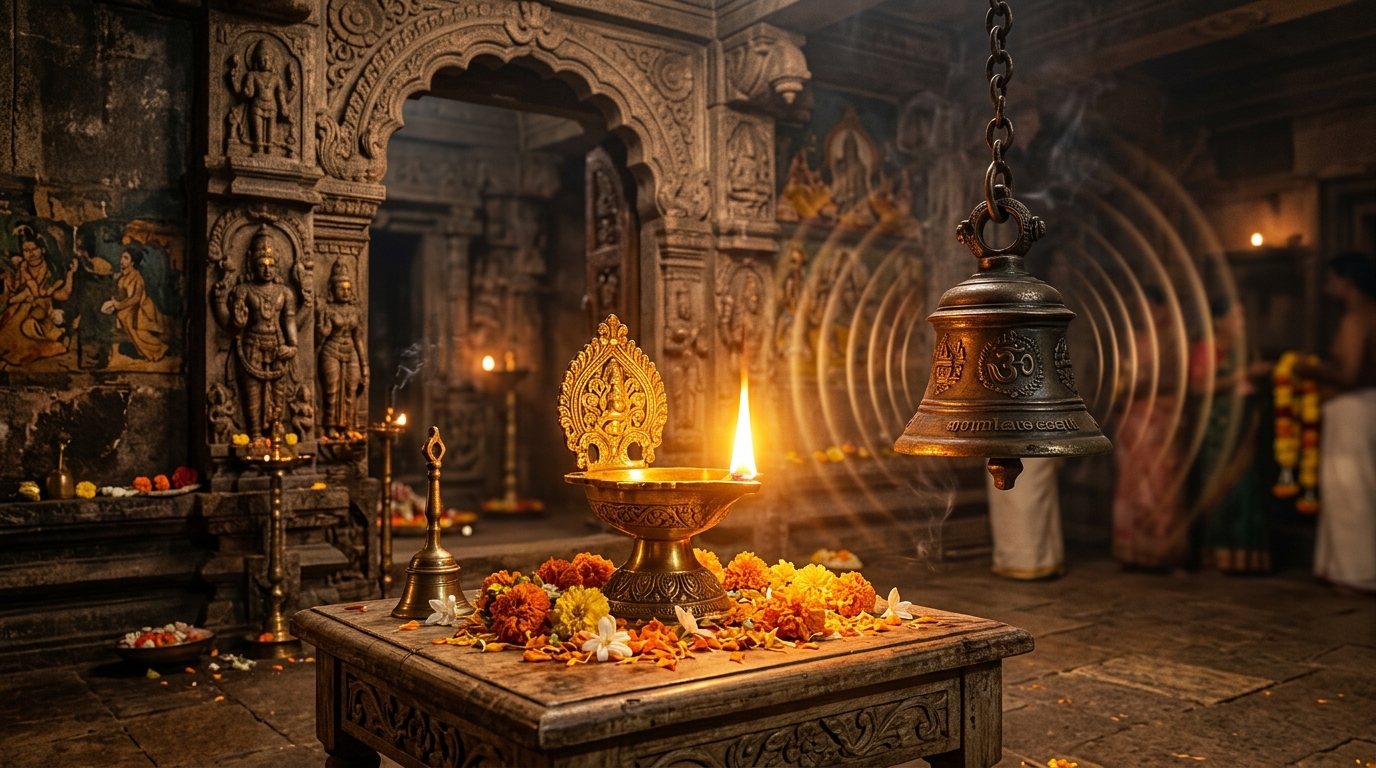
🕉️ 1. The Physics of Brass & Copper Deepaks: Air Ionization & Microbial Purification
For millennia, every Hindu household begins and ends the day by lighting an oil or ghee lamp. Modern physics and environmental chemistry reveal that burning clarified butter (cow ghee) produces an aerosol of esters and volatile fatty acids that adhere to airborne dust and bacteria, settling them harmlessly to the ground.
Unlike synthetic wax candles which release toluene and benzene hydrocarbons, pure brass deepaks generate a localized plume of negative ions. Negative atmospheric ions have been demonstrated in clinical studies to boost serotonin levels, reduce indoor particulate pollution (PM2.5), and create an alert yet deeply calm neurological state ideal for meditation (Dhyana).
🕉️ 2. Acoustical Resonance: Why Temple Bells Ring at Harmonics of 432 Hz
Entering a traditional Sanatan temple requires touching the doorway and ringing the overhead bell (Ghanta). The architecture of ancient Indian bells is an acoustical marvel. Formulated from precise metallurgical ratios of copper, zinc, tin, and lead, striking the clapper creates a sustained ring lasting seven full seconds.
Seven seconds is precisely the temporal threshold required by the human brain to disengage from sensory overload and enter the Alpha wave state (8–12 Hz). The overtone resonance cleanses the surrounding space, synchronizing the left analytical and right intuitive cerebral hemispheres.
🕉️ 3. Shankha Naad: Diaphragmatic Pulmonary Health & Acoustic Energy
The sacred Shankha (Turbinella pyrum) blown before aarti produces a rich, non-linear pressure wave. Pulmonologists note that the physical mechanics of blowing a conch shell engage the intercostal muscles, diaphragm, and pelvic floor simultaneously.
Regular conch blowing strengthens respiratory muscle tone, mitigates sleep apnea, improves thyroid vascularization, and relieves vocal cord tension. Acoustically, the high-frequency vibrations disrupt bacterial cell walls in indoor enclosed sanctorums.
🕉️ 4. Sacred Copper Vessels (Tamra Jal) & The Oligodynamic Effect
The ritual of keeping water overnight in a clean copper pot (Tamra Patra) and drinking it upon rising (Ushapan) is documented in the Charaka Samhita. Today, microbiology recognizes this as the oligodynamic effect.
Even minute quantities of copper ions (approx. 40–50 ppb) destabilize bacterial membranes without harming human physiology. It regulates thyroid activity, assists collagen formation, aids hemoglobin synthesis, and naturally balances the Tridoshas (Vata, Pitta, and Kapha).
❓ Frequently Asked Questions (AEO & Vedic Q&A)
When pure cow ghee burns in a brass or clay diya, it creates carbon-oxygen molecular bonds that emit negative ions into the air. These negative ions neutralize airborne bacteria, particulate allergens, and electrostatic charges, while the radiant golden photons stimulate human pineal gland activity and focus.
Temple bells are cast from Panchadhatu or Ashtadhatu (copper, zinc, tin, nickel, silver, etc.). When struck, this specific alloy generates an acoustic resonance sustained for at least 7 seconds at frequencies harmonizing with 432 Hz. This sound wave synchronizes the left and right hemispheres of the human brain and clears stagnant auditory neural channels.
Blowing a Shankha requires deep diaphragmatic breathing and forceful exhalation against resistance. This exercises the lungs, expands thoracic vital capacity, improves thyroid and vocal cord circulation, and the acoustic pressure waves destroy airborne pathogens within an acoustic radius of several meters.
Copper possesses the oligodynamic effect — a biocidal mechanism where microscopic copper ions leach into water, destroying salmonella, E. coli, and fungal spores. Ayurvedic ephemeris and modern biomedical tests confirm that 8 hours of copper contact makes water naturally alkaline and antimicrobial.