🌸 1. Bhai Dooj 2026: Auspicious Date, Kartik Shukla Dwitiya Tithi & Astronomical Timings
Bhai Dooj (also revered across India as Bhai Beej, Yama Dwitiya, Bhaubeej, and Bhai Tika) represents the grand and heartwarming culmination of the five-day Deepavali festival sequence. Celebrated on the second day of the bright fortnight of the holy month of Kartik (Kartik Shukla Dwitiya), this sacred festival glorifies the eternal bond of affection, mutual protection, and spiritual goodwill between brothers and sisters. In 2026, Bhai Dooj will be universally celebrated on Wednesday, November 11, 2026.
According to Vedic astronomical computation (Siddhanta Jyotish), the Kartik Shukla Dwitiya tithi commences on the afternoon of Tuesday, November 10, 2026, and spans through the sacred Udaya Tithi (sunrise tithi) and prime Aparahna Kaal (afternoon period) of Wednesday, November 11, 2026. Because scriptural injunctions in the Nirnayasindhu and Dharmasindhu mandate that Yama Dwitiya rituals and the sacred sister's Tilak must be performed when Dwitiya tithi coincides with the Aparahna period, Wednesday, November 11, 2026 is the universally recommended day for the observance.
| Panchang Milestone / Astronomical Event | Calculated Timing (IST) | Scriptural Context & Guidelines |
|---|---|---|
| Kartik Shukla Dwitiya (Beej) Commences | Tuesday, 10 November 2026 at 02:01 PM | Commencement of auspicious second lunar tithi |
| Kartik Shukla Dwitiya (Beej) Concludes | Wednesday, 11 November 2026 at 03:53 PM | Transition into Kartik Shukla Tritiya |
| Bhai Dooj Main Observance Day | Wednesday, 11 November 2026 | Udaya Tithi & full Aparahna Kaal presence (Universal Celebration) |
| Prime Shubh Tilak & Puja Muhurat (Aparahna) | 01:12 PM – 03:26 PM (2 hrs 14 mins) | Most meritorious shastric window for Aarti, Tilak & Bhojan |
| Morning Labha Choghadiya | 06:51 AM – 08:14 AM | Morning prayers, temple visit & family gathering |
| Morning Amrita Choghadiya | 08:14 AM – 09:37 AM | Auspicious nectar muhurat for ritual preparations |
| Day Shubha Choghadiya | 11:00 AM – 12:23 PM | Puja preparation, thali arrangement & blessings |
| Abhijit Muhurat | 12:01 PM – 12:45 PM | Auspicious mid-day universal victory period |
| Rahu Kaal (Avoid Inauspicious Acts) | 12:23 PM – 01:46 PM | Avoid starting major fresh commercial contracts |
To check exact sunrise, sunset, and localized tithi transition timings for your city, consult our live Daily Vedic Panchang and real-time Choghadiya Muhurat Engine.
🕉️ 2. The Divine Scriptural Significance of Yama Dwitiya & Sister Yamuna
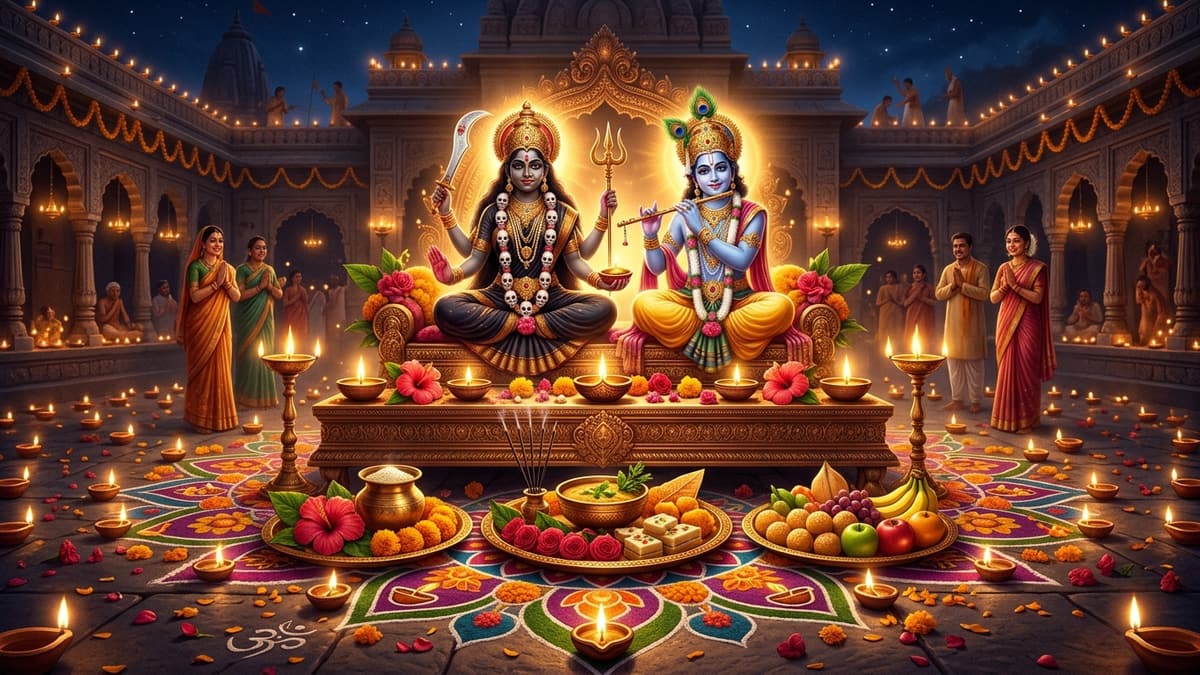
While Bhai Dooj is celebrated as a joyous family festival of sibling love, its Vedic foundation is deeply spiritual and enshrined in the ancient Puranas, particularly the Skanda Purana, Bhavishya Purana, and Padma Purana. The festival is traditionally called Yama Dwitiya, honouring Lord Yamaraj (the Lord of Justice and Dharma) and his twin sister, the sacred river goddess Yamuna (Yami), both born to Surya Deva (the Sun God) and Sanjna (Sandhya).
According to timeless legend, Goddess Yamuna repeatedly invited her busy brother Yamaraj to visit her dwelling on Earth. Constantly occupied with the rigorous administration of universal karma and cosmic accountability in Yamaloka, Yamaraj had never been able to visit. However, on Kartik Shukla Dwitiya, Lord Yamaraj finally arrived at Yamuna's abode on the riverbank.
Overjoyed by her brother's arrival, Yamuna welcomed Yamaraj with profound reverence. She washed his lotus feet, adorned his forehead with an auspicious vermilion (kumkum) and unbroken rice (akshat) Tilak, placed a fragrant garland around his neck, and lovingly served him a divine feast of handcrafted satvik delicacies. Deeply touched by Yamuna's unconditional affection and devotion, Lord Yamaraj granted her a supreme boon of her choice.
🌟 The Divine Yama Dwitiya Boon:
Goddess Yamuna prayed: "O beloved brother, grant that on this sacred second day of Kartik Shukla, any brother who visits his sister, accepts food cooked with love by her hand, and receives her holy tilak, shall be blessed with longevity, health, and freedom from the terror of premature death (Akaal Mrityu) or punishment in Yamaloka. Moreover, those who take a holy bath in the sacred Yamuna waters today shall attain spiritual purification and liberation." Lord Yamaraj happily granted this eternal boon.
Read the complete traditional sacred narrative in our dedicated Bhai Dooj Vrat Katha & Story guide.
✨ 3. Lord Krishna and Subhadra: The Divine Post-Narakasura Homecoming
In addition to the legend of Yamaraj and Yamuna, Sanatan tradition links Bhai Dooj to Bhagwan Shri Krishna and His beloved sister Subhadra. Following the cosmic battle on Naraka Chaturdashi (Kali Chaudas) wherein Lord Krishna annihilated the tyrant demon king Narakasura and liberated 16,100 innocent princesses, the Lord returned triumphantly to Dwarka.
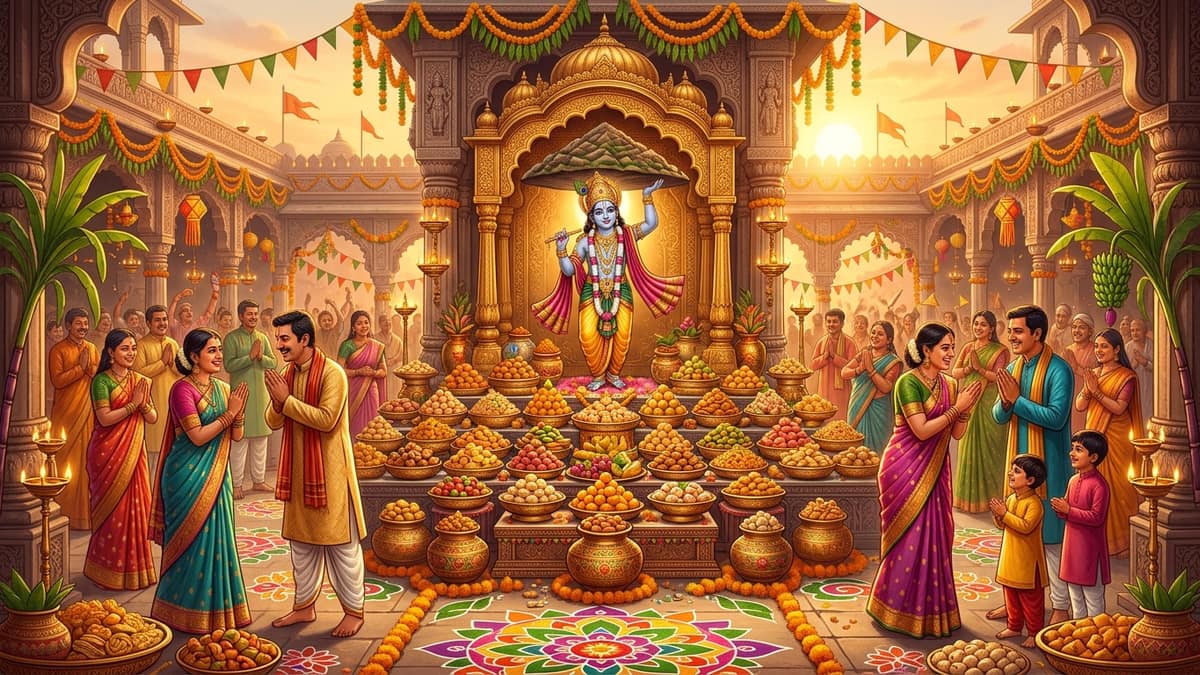
On Kartik Shukla Dwitiya, Lord Krishna visited the residence of His sister Subhadra. Subhadra greeted her victorious divine brother with radiant affection, waving a golden Aarti thali, singing hymns of praise, placing a fragrant floral garland on Him, and applying an auspicious tilak of sandalwood paste and saffron on His forehead. She then offered Him royal sweets and sweet rice. Delighted by her pure devotion, Lord Krishna showered Subhadra with divine blessings of eternal joy, protection, and prosperity.
This radiant tradition establishes the timeless custom wherein sisters perform Aarti and apply sacred Tilak for their brothers' triumph over inner darkness, health, and spiritual victory.
🪔 4. Step-by-Step Bhai Dooj Puja Vidhi & Sacred Tilak Ritual
Performing Bhai Dooj according to traditional shastric guidelines infuses the sibling relationship with spiritual protection and harmony. Follow this authentic step-by-step procedure:
1. Morning Snan & Yamuna Smaran
Take an early morning holy bath. If residing near a sacred river, especially River Yamuna (Mathura, Vrindavan, Prayagraj), taking a holy dip (Yamuna Snan) is considered supremely meritorious. At home, chant "Gange Cha Yamune Chaiva Godavari Saraswati" while bathing.
2. Preparing the Sacred Puja Thali
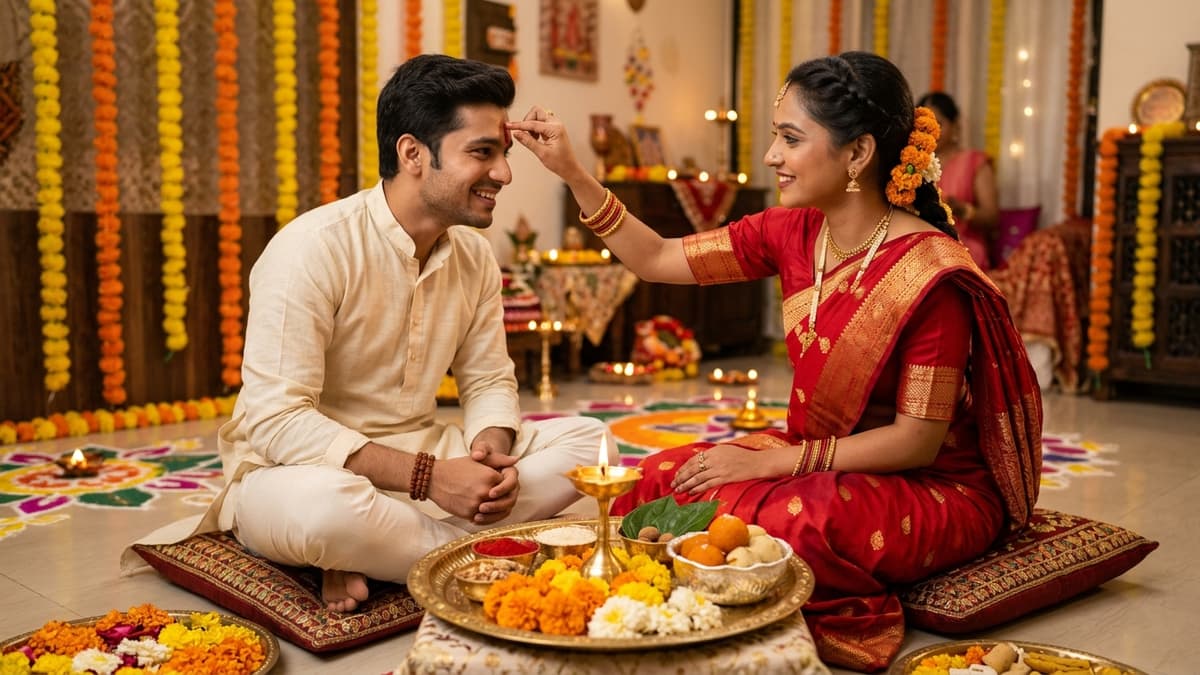
Arrange an auspicious brass or silver thali with Roli (vermilion), Chandan (sandalwood), Akshat (unbroken rice grains washed in Ganga jal), fresh flowers, Dub (Durva grass), Betel leaf (Paan), Supari, dry coconut (Gola), sweets (mithai), and a pure ghee lamp (Diya).
3. Seating & Direction (Chauki Sthapana)
Spread a clean wooden low stool (Patla/Chauki) adorned with rice flour or kumkum swastika. Seat the brother facing the East or North direction. Traditional belief advises covering the brother's head with a sacred handkerchief or stole during the ceremony.
4. Tilak, Akshat & Aarti
Sister gently applies the auspicious Tilak on the brother's forehead using the ring finger (Anamika). Apply unbroken Akshat grains on the tilak. Perform a gentle clockwise Aarti with the lit ghee lamp while praying silently to Lord Yama and Goddess Yamuna for the brother's longevity.
5. Kalava, Coconut & Sweet Offering
Tie a sacred protection thread (Kalava/Raksha Sutra) on the brother's right wrist. Place a dry coconut (Gola/Shriphal) with paan and supari into his open hands. Sweeten his mouth with traditional sweets (laddoo, kheer, or peda).
6. Bhagini Bhojan & Exchange of Gifts
The brother partakes in a loving home-cooked meal prepared by the sister (Bhagini Hasta Bhojanam). The brother touches the sister's feet (if elder) or blesses her (if younger) and offers affectionate gifts, clothes, or shagun as tokens of lifetime care and protection.
📜 5. Sacred Mantras to Chant During Bhai Dooj Tilak
Chanting Vedic and Puranic mantras during the tilak infuses the ritual with positive spiritual vibrations. Sisters can recite the following traditional verses while applying the tilak:
🕉️ Traditional Bhai Dooj Tilak Prayer (Sister's Blessing):
गंगा पूजे यमुना को, यमी पूजे यमराज को।
सुभद्रा पूजे कृष्ण को, गंगा यमुना नीर बहे, मेरे भाई की आयु बढ़े॥
"Just as holy Ganga reveres Yamuna, just as Yami worships Yamaraj, just as Subhadra worships Shri Krishna; as long as the sacred waters of Ganga and Yamuna flow on Earth, may my brother's life and virtues flourish!"
🕉️ Yama Dwitiya Shloka (Scriptural Invocation):
धर्मराज नमस्तुभ्यं नमस्ते यमुनाग्रज।
पाहि मां सर्वपापेभ्यो सूर्यपुत्र नमोऽस्तु ते॥
"Salutations to You, O Dharmaraja! Salutations to the elder brother of Goddess Yamuna. Protect me and my family from all sins and calamities, O son of Surya Deva, I bow unto You."
Discover more sacred chants and stotras in our comprehensive Sanatan Mantras Collection.
🌏 6. Regional Names and Customs Across India
The sublime beauty of Bhai Dooj is reflected in its diverse cultural expressions across India's vibrant states:
- Bhai Beej (Gujarat): Celebrated on the day following Bestu Varsh (Gujarati New Year). Sisters prepare traditional Gujarati sweets such as Basundi, Ghari, or Shrikhand and welcome brothers into their homes with warm blessings for the new Vikram Samvat year.
- Bhaubeej / Bhav-Bij (Maharashtra & Goa): Sisters create intricate floor designs (kareet squash ceremony in some regions), perform aarti, and serve handcrafted Puran Poli or Basundi.
- Bhai Phonta (West Bengal): Sisters observe a strict waterless fast until applying a special tilak made of sandalwood paste, kajal, and ghee on their brothers' foreheads using the little finger of the left hand, reciting the ancient rhyme: "Bhaiyer kopale dilam phonta, Jomer duare porlo kanta..."
- Bhai Tika (Nepal & Himalayan Belt): Known as Kija Pooja or Bhai Tika, sisters apply a magnificent seven-colored elongated tilak (Saptarangi Tika) and garland brothers with sacred Sayapatri (marigold) and Makhamali (Globe Amaranth) flowers that never wither.
- Yama Dwitiya (North India & Vraja Mandala): Thousands of brothers and sisters gather at the sacred Vishram Ghat on the banks of River Yamuna in Mathura to take a joint holy bath, praying for lifelong unity and liberation.
⚖️ 7. Crucial Do's and Don'ts on Bhai Dooj 2026
✅ What You SHOULD Do:
- Perform the Tilak preferably during the Aparahna Kaal (01:12 PM – 03:26 PM) or during auspicious morning Choghadiya.
- Brothers must visit their sisters' homes and partake of a lovingly cooked meal (Bhagini Hasta Bhojanam).
- Use unbroken whole rice grains (Akshat) washed with clean water or milk for the tilak.
- Give respect, thoughtful gifts, or financial shagun to the sister as a symbol of protection.
- Offer lighting of a four-wick oil lamp (Yama Deepam) facing South in the evening for family longevity.
❌ What You SHOULD AVOID:
- Do not perform the Tilak during Rahu Kaal (12:23 PM – 01:46 PM).
- Avoid quarrels, harsh speech, or harbor ill feelings with siblings on this sacred day.
- Brothers should avoid dining alone in their own homes if their sister lives within accessible distance.
- Avoid using broken rice grains (Khandit Akshat) for the tilak or puja.
- Avoid consuming heavy tamasic food, meat, or alcohol on this sacred holiday.
🪔 8. The Evening Yama Deepam Ritual for Longevity and Peace
In addition to daytime tilak ceremonies, Sanatan scriptures prescribe lighting an evening oil lamp dedicated to Lord Yamaraj on Yama Dwitiya. Known as Yama Deepadana, this ritual is performed by lighting a four-faced (chaumukha) earthen or flour lamp with mustard oil or sesame oil.
The lamp is placed outside the main doorway or in the courtyard of the house, facing the South direction (the celestial realm of Yama). While offering the lamp, family members pray: "May Lord Yamaraj, the dispenser of cosmic dharma, be pleased with this deepam and shield our household from untimely demise, incurable sickness, and negative energies." This beautiful ritual concludes the five-day festival of lights with peaceful cosmic protection.
Explore our complete festival directory on the Hindu Festivals & Vrats Calendar.