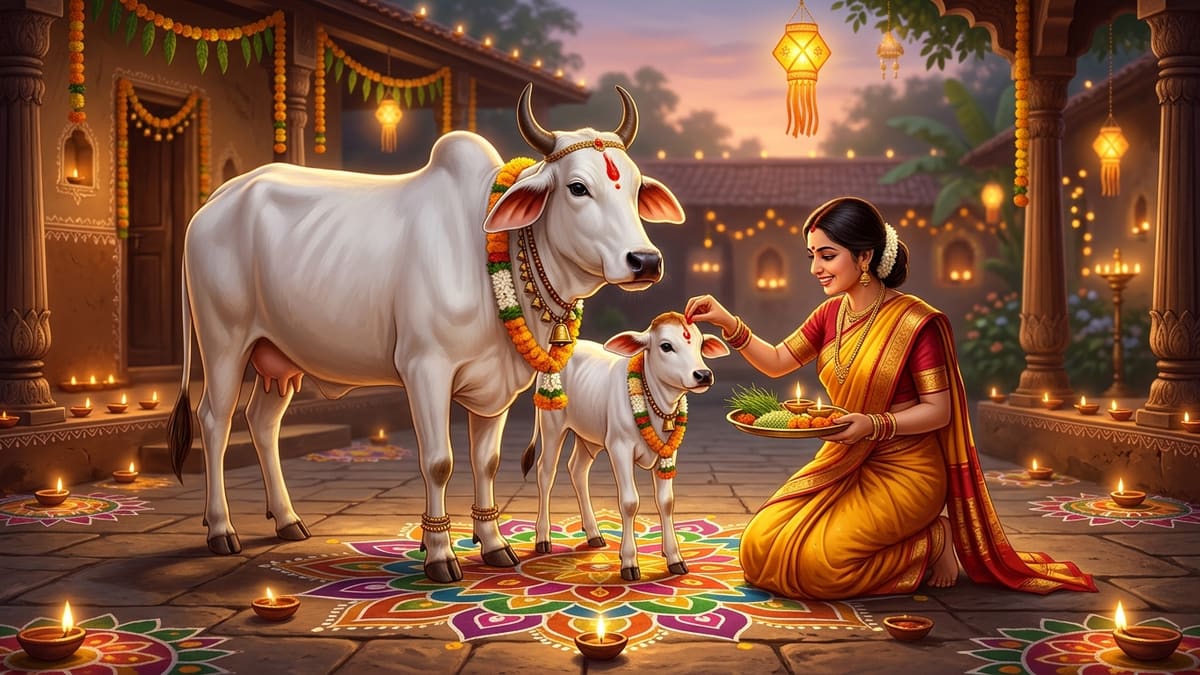
🐄 1. Vagh Baras 2026: Date, Dwadashi Tithi & Astrological Calendar
Vagh Baras, also universally celebrated across India as Govatsa Dwadashi, Vasu Baras, and Nandini Vrat, is the divine first herald and official opening festival of the grand Deepavali celebration. In 2026, Vagh Baras will be joyously observed on Thursday, November 5, 2026.
According to the Vedic lunar calendar (Vikram Samvat 2082), the festival falls on the 12th lunar day of the dark fortnight (Krishna Paksha) of the sacred month of Ashwin—known as Aaso Vad Baras in Gujarat and Maharashtra (Amanta calendar), and as Ashwin Krishna Dwadashi in North India (Purnimanta calendar). To view live planetary coordinates, local sunrise, and tithi transitions, visit our interactive Daily Vedic Panchang.
| Vedic Milestone / Astronomical Event | Calculated Timing (IST) | Scriptural Significance |
|---|---|---|
| Dwadashi Tithi Commences | Wednesday, 4 November 2026 at 11:09 AM | Entry of sacred Krishna Dwadashi |
| Dwadashi Tithi Concludes | Thursday, 5 November 2026 at 10:41 AM | Transition into Trayodashi (Dhanteras eve) |
| Govatsa Dwadashi Pradosh Kaal Muhurat | 05:35 PM to 08:12 PM (5 Nov 2026) | Twilight window for Cow & Calf worship |
| Udaya Tithi Vagh Baras Observance | Thursday, 5 November 2026 | Traditional Gujarati ledger settlement & festive start |
| Next Festive Milestone: Dhanteras | Friday, 6 November 2026 | Dhanvantari Jayanti & Kubera Lakshmi Puja |
Note: Because Dwadashi prevails during Wednesday evening (Nov 4) as well as Thursday morning (Nov 5), families performing evening Go-Puja can observe the Pradosh Kaal rituals on either Nov 4 evening or Nov 5 Udaya Tithi as per family tradition. In Gujarat, businesses and households officially mark Vagh Baras on Thursday, November 5, 2026.
🪔 2. Pradosh Kaal Go-Vatsa Puja Muhurat & Shubh Choghadiya
According to the Nirnaya Sindhu and Dharma Sindhu, Govatsa Dwadashi worship must be performed in the Pradosh Kaal (the sacred 2.5-hour period following sunset). On Thursday, November 5, 2026, the sunset across major Indian cities occurs between 05:33 PM and 06:03 PM.
The highly auspicious Pradosh Kaal Go-Vatsa Puja window spans from 05:35 PM to 08:12 PM. To plan your family's evening rituals with auspicious celestial energy, check our Live Choghadiya & Shubh Timings Portal.
| City | Sunset (IST) | Pradosh Kaal Cow Puja Muhurat |
|---|---|---|
| Ahmedabad / Gandhinagar | 05:59 PM | 05:59 PM – 08:35 PM |
| Vadodara / Surat / Rajkot | 06:02 PM | 06:02 PM – 08:38 PM |
| Mumbai / Thane / Pune | 06:03 PM | 06:03 PM – 08:39 PM |
| New Delhi / NCR | 05:33 PM | 05:33 PM – 08:11 PM |
| Jaipur / Udaipur | 05:43 PM | 05:43 PM – 08:20 PM |
| Bengaluru / Hyderabad | 05:52 PM | 05:52 PM – 08:28 PM |
🕉️ 3. The Three Names: Vagh Baras, Govatsa Dwadashi & Vasu Baras Explained
This enchanting festival unites three profound cultural and spiritual streams under different names across Indian states:
- Govatsa Dwadashi (Sanskrit): Literal meaning: "Go" (Cow) + "Vatsa" (Calf) + "Dwadashi" (12th Tithi). It honors Kamadhenu's celestial offspring, Nandini, representing maternal unconditional love and cosmic sustenance.
- Vagh Baras (Gujarat): Derived from the Gujarati mercantile concept of "Vaghvun" (વાઘવવું), meaning to clear, square off, or settle pending financial accounts, debts, and ledgers before initiating new books on Diwali. In rural Saurashtra and tribal Dang, it also honors the tiger (Vagh) as nature's jungle guardian so livestock remain protected.
- Vasu Baras (Maharashtra & Goa): In Sanskrit and Marathi, "Vasu" signifies divine wealth, illumination, and Kamadhenu herself. Maharashtrian families revere mother cow as the foundation of agricultural abundance.
📜 4. Significance in Gujarat: Merchant Ledger Balancing ("Vaghvun") & Diwali Kickoff
In Gujarat's legendary mercantile culture, Vagh Baras holds a distinct economic and ethical dimension:
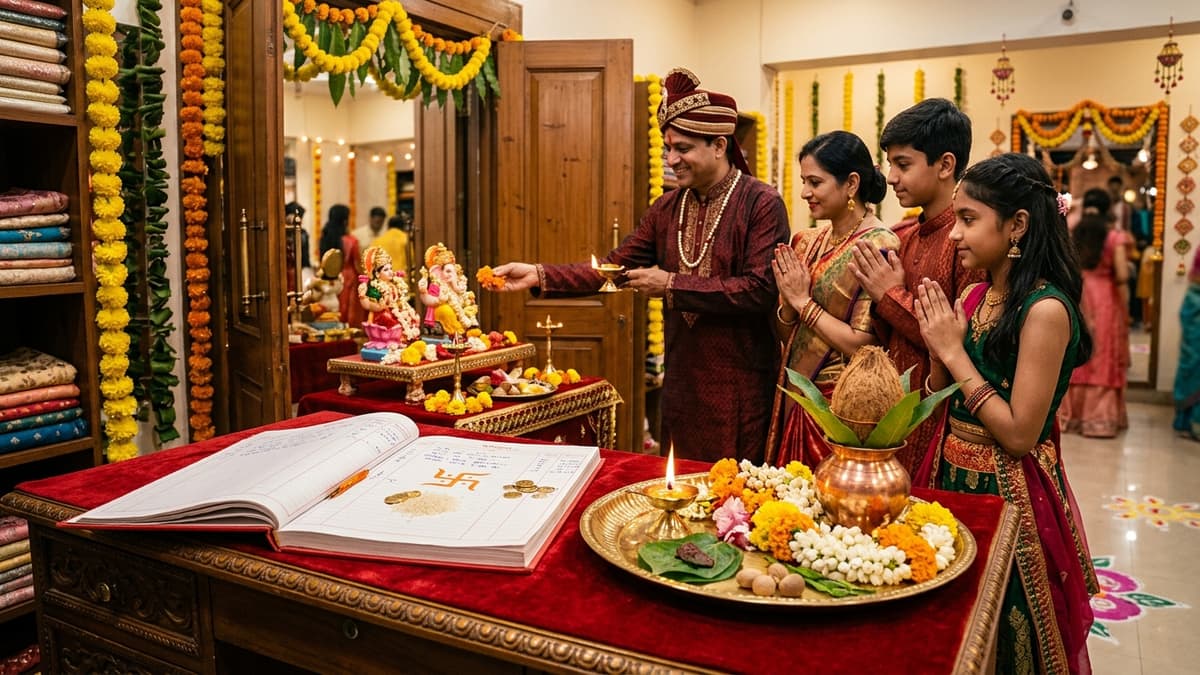
Traditional merchants, shroffs, and shopkeepers dedicate Vagh Baras to closing their annual debt registers. Outstanding credit balances are reconciled, and debts are paid back to suppliers and partners with mutual goodwill. No new financial transactions or lending are started on this day, creating a clean slate for the sacred Chopda Pujan on Diwali night.
Vagh Baras also initiates the continuous lighting of evening oil lamps (Deepaks) on doorsteps, inaugurating the vibrant 6-day Diwali festival period. Discover all upcoming festivities in our Festivals & Vrats Calendar.
🐄 5. Step-by-Step Cow and Calf (Go-Mata & Vatsa) Puja Vidhi
In Sanatan Hindu philosophy, the Cow is revered as Sarva Deva Mayi (housing all 33 Koti divine energies). Worshiping a mother cow with her nursing calf on Govatsa Dwadashi bestows health, prosperity, and offspring longevity:
- Welcoming Go-Mata: Bathe the cow and calf gently, or clean their hooves and foreheads with pure water.
- Sacred Adornment: Apply vermilion (kumkum) and turmeric (haldi) tilak to their foreheads. Adorn their necks with fresh marigold garlands and tie auspicious yellow mauli threads.
- Incense & Aarti: Perform aarti using a brass deepak lit with sesame oil or cow ghee, and wave fragrant dhoop sticks while ringing a temple bell.
- Prasad Offerings: Offer a mixture of soaked sprouted green gram (moong), whole bajra, fresh green grass, jaggery (gur), and sweet rotis prepared from bajra or coarse wheat.
- Pradakshina: Circumambulate (Pradakshina) the cow and calf 3 times with reverent devotion, touching the cow's back and seeking forgiveness for any unintended karmic faults.
If a real cow is unavailable in urban settings: Devotees worship a brass, silver, or clay idol of a Cow and Calf (Kamadhenu murti) on their home altar following the identical rituals.
🚫 6. Unique Dietary Rules: Why Milk, Curd, Ghee & Knife-cut Foods are Forbidden
Govatsa Dwadashi features one of the most compassionate and selfless dietary austerities in all of Sanatan Dharma:
- Complete Abstinence from Dairy: Devotees strictly refrain from drinking cow's milk, buttermilk, curd, and consuming ghee or butter on this day. The scriptural rationale is deeply moving: On Govatsa Dwadashi, all mother's milk belongs exclusively to the newborn calf! Humans voluntarily step aside so the calf drinks freely.
- No Sliced / Knife-cut Vegetables: In many regional traditions (especially Maharashtra and Gujarat), women do not use knives or blades to slice vegetables or wheat rotis on this day, honoring non-violence (Ahimsa). Instead, meals consist of boiled sprouted moong, un-sliced root tubers, and gram preparations.
📖 7. Sacred Legend of Kamadhenu & King Uttanapada from Bhavishya Purana
According to the sacred Bhavishya Purana, when the celestial ocean was churned during Samudra Manthan, the divine wish-fulfilling cow Kamadhenu emerged on Ashwin Krishna Dwadashi. Sage Vasishtha took charge of Kamadhenu, whose daughter Nandini later gave divine boons to royal lineages.
The scripture also recounts the tale of King Uttanapada (father of Bhakta Dhruva) and his queen Suniti, who observed the Govatsa Dwadashi vrat with pure devotion. Pleased with their humility and service to cows, Goddess Surabhi blessed their kingdom with unending agricultural fertility, absence of untimely infant deaths, and divine heirs.
Explore more spiritual insights in our Vedic Vrat Kathas & Stories Library.
Follow up Vagh Baras with preparations for Diwali 2026 Lakshmi Puja & Muhurat.
🕉️ 8. Vedic Cow Worship Mantras for Prosperity & Child Well-being
Chanting these revered Sanskrit mantras during Govatsa Dwadashi invokes profound cosmic blessings:
1. Govatsa Dwadashi Prarthana Mantra (Prayer to Kamadhenu & Nandini):
सर्वदेवमये देवि सर्वकामप्रदायिनि।
मातर्ममाभिलषितं सफलं कुरु नन्दिनि॥
Meaning: O divine Mother Nandini, embodiment of all celestial divinities and fulfiller of all pure desires! Bestow Your grace and grant success to my heartfelt prayers.
2. Go-Pranam Mantra (Universal Cow Salutation):
नमो गोभ्यः श्रीमतीभ्यः सौरभेयीभ्य एव च।
नमो ब्रह्मसुताभ्यश्च पवित्राभ्यो नमो नमः॥
Meaning: Salutations to the revered cows, descendants of Surabhi, daughters of Brahma, the purest and most sacred of all creations.
✅ 9. Key Do's & Don'ts for Vagh Baras Observance
To observe Govatsa Dwadashi with full scriptural propriety, keep these essential practices in mind:
| What to Do (Auspicious Practices) | What to Avoid (Inauspicious Actions) |
|---|---|
| Worship a cow with her calf together, feeding them sprouted moong and grass. | Do not consume milk, curd, butter, paneer, or ghee on this day. |
| Light oil deepaks in cattle sheds (Gaushalas) and at the home entrance. | Do not cut or slice vegetables or food items using knives in traditional kitchens. |
| Settle pending credit debts and balance old ledger books with goodwill. | Do not scold, hit, or turn away cows or animals from your doorstep. |
| Prepare satvik meals made from sprouted pulses and coarse millets (bajra). | Do not begin new loan lending or high-risk speculative financial bets. |