🌸 1. Dev Diwali 2026: Auspicious Date, Kartik Purnima Tithi & Astronomical Timings
Dev Diwali (revered as Dev Deepawali, Tripurotsav, and the grand culmination of the holy month of Kartik) is celebrated exactly fifteen days after Diwali (Deepavali) on the full moon night of Kartik Purnima (Kartik Sud Poonam). Known as the 'Diwali of the Gods', tradition holds that on this celestial night, the 33 Koti Devas (celestial divinities) descend from the heavens to bathe in the holy waters of the sacred River Ganga and illuminate the riverbanks and temples with millions of radiant earthen lamps. In 2026, Dev Diwali will be celebrated on Tuesday, November 24, 2026.
According to Vedic astronomical computation (Siddhanta Jyotish), the Kartik Purnima tithi commences late night on Monday, November 23, 2026, at 11:46 PM and extends until Tuesday, November 24, 2026, at 08:29 PM. In accordance with sacred Puranic rules, Dev Deepawali must be observed on the day when the Purnima tithi prevails during Pradosh Kaal (the sacred dusk period following sunset). On Tuesday, November 24, the Purnima tithi is present both at sunrise (Udaya Tithi) and throughout the entire Pradosh Kaal (sunset at 05:54 PM until 08:20 PM). Therefore, Tuesday, November 24, 2026 is the universally accepted, harmonious day for holy bathing (Snan), Dev Deepawali Deepdan, and temple illumination.
| Panchang Milestone / Astronomical Event | Calculated Timing (IST) | Scriptural Context & Ritual Significance |
|---|---|---|
| Kartik Purnima (Poonam) Commences | Monday, 23 November 2026 at 11:46 PM | Commencement of auspicious full moon tithi |
| Kartik Purnima (Poonam) Concludes | Tuesday, 24 November 2026 at 08:29 PM | Transition into Margashirsha Krishna Pratipada |
| Dev Diwali & Kartik Snan Main Day | Tuesday, 24 November 2026 | Simultaneous Udaya Tithi and Pradosh Kaal presence |
| Prime Pradosh Deepdan Muhurat | 05:54 PM – 08:20 PM (2 hrs 26 mins) | Most auspicious window for lighting ghat and household diyas |
| Sunset Time (Surya Astha) | 05:54 PM | Commencement of Pradosh Kaal |
| Night Labha Choghadiya (Evening) | 07:32 PM – 09:10 PM | Auspicious night window for prayer, aarti & charity |
| Abhijit Muhurat (Mid-day) | 12:04 PM – 12:48 PM | Mid-day victory window for Satyanarayan Puja |
| Rahu Kaal (Avoid Inauspicious Acts) | 03:09 PM – 04:31 PM | Avoid commencing prime new ventures during this window |
| Coinciding Sacred Festivals | Guru Nanak Jayanti & Matsya Jayanti | 557th Prakash Parv & Lord Vishnu's fish incarnation |
To check exact sunrise, sunset, and localized tithi transition timings for your city, consult our live Daily Vedic Panchang and Choghadiya Muhurat Engine.
🕉️ 2. The Puranic Origins: Tripurasura Samhara & Shiva as 'Tripurari'
The sublime spiritual origin of Dev Diwali is immortalized in the Shiva Purana, Matsya Purana, and Linga Purana. In the ancient Satya Yuga, the three sons of demon king Tarakasura—Tarakaksha, Kamalaksha, and Vidyunmali—performed severe austerities to propitiate Lord Brahma. They received a boon of three impregnable flying cities (Tripura) constructed of gold, silver, and iron by the divine architect Mayasura. The boon decreed that these cities could only be destroyed by a single arrow when all three cities aligned in a straight line once every thousand years.
Empowered by this invulnerability, the demons conquered heaven, earth, and the netherworlds, tormenting sages and uprooting cosmic Dharma. In deep desperation, Lord Brahma and all Devas pleaded with Lord Shiva for cosmic intervention. Lord Shiva fashioned a divine chariot representing the cosmic universe: the Earth was His chariot, Mount Meru His bow, Lord Vishnu His arrow, and Agni Deva its blazing arrowhead.
When the three cities aligned on Kartik Purnima, Lord Shiva released His fiery arrow (Pashupatastra), incinerating Tripurasura and restoring cosmic peace and virtue. Hence, Lord Shiva earned the revered title Tripurari (Destroyer of Tripura). Filled with jubilation and gratitude, the celestial Devas celebrated this triumph by descending to Kashi (Varanasi), bathing in the sacred Ganga, and lighting thousands of radiant lamps along the riverbanks. This divine jubilation became immortalized as Dev Deepawali.
🐟 3. Matsya Avatara & The Auspicious Conclusion of Tulsi Vivah
Kartik Purnima is celebrated as a multi-layered confluence of supreme divine milestones:
- Matsya Avatara Manifestation: According to the Bhagavata Purana, on Kartik Purnima, Lord Vishnu incarnated as Matsya Avatara (the Divine Fish Incarnation). The Lord rescued the sacred Vedas from the clutches of the demon Hayagriva and guided King Satyavrata (Vaivasvata Manu) and the Saptarishis through the cosmic deluge (Pralaya) to preserve universal creation.
- Conclusion of Tulsi Vivah: The sacred ceremonial wedding of Goddess Tulsi with Lord Shaligram, which commences on Devutthana Ekadashi, reaches its divine completion on Kartik Purnima. Read the full sacred ritual in our dedicated Tulsi Vivah Vrat Katha & Vidhi guide.
- End of Chaturmas Penance: The four-month sacred period of spiritual austerity (Chaturmas) officially concludes on Kartik Purnima. Auspicious ceremonies including Hindu weddings, Griha Pravesh, and sacred pilgrimages resume with renewed vigor.
- Guru Nanak Dev Ji Jayanti: In the Sikh tradition, Kartik Purnima marks the sacred birthday (Prakash Parv) of Guru Nanak Dev Ji, celebrated with soul-stirring Kirtan, Prabhat Pheris, and community Langar.
🪔 4. Step-by-Step Dev Diwali Puja Vidhi & Pradosh Deepdan
To partake of the divine blessings on Tuesday, November 24, 2026, follow this authentic step-by-step procedure:
1. Brahma Muhurat Ganga Snan
Take an early morning holy bath before sunrise. If you reside near a holy river (Ganga, Yamuna, Narmada, Godavari, or Kaveri), taking a sacred dip (Kartik Snan) yields the spiritual merit of thousands of Ashwamedha yajnas. At home, add a few drops of Ganga jal to your bathwater.
2. Shiva-Vishnu Abhishek & Archana
Perform Panchamrit Abhishek of Shiva Lingam with milk, curd, ghee, honey, and sacred water. Offer Bilva leaves, white flowers, and bhasma to Lord Shiva. Simultaneously worship Bhagwan Vishnu with Tulsi leaves, yellow chandan, and seasonal fruits.
3. Shri Satyanarayan Vrat & Katha
Kartik Purnima is one of the most powerful days to perform the Satyanarayan Vrat. Recite the sacred katha during Abhijit Muhurat or early afternoon, offer roasted wheat flour prasad (Panjiri) and Panchamrit, and pray for family prosperity and peace.
4. Pradosh Kaal Deepdan (05:54 PM – 08:20 PM)
The quintessential ritual of Dev Diwali is Deepdan (offering of lamps). Prepare 11, 21, 51, or 108 earthen diyas filled with pure sesame oil, mustard oil, or cow ghee. Light them at dusk and place them at temple shrines, near the sacred Tulsi plant, at riverfronts, and at household entrances.
5. Floating Diyas (River Arpan)
If near a river, lake, or temple reservoir, gently float lit diyas placed on leaf cups (Drona) into the flowing water while praying to Mother Ganga and Lord Tripurari for liberation from ancestral debts and sins.
6. Charitable Giving (Daan)
Scriptures emphasize donating blankets, warm clothes, food grains, sesame seeds (Til), jaggery, and brass utensils to the needy and deserving Brahmins on Kartik Purnima to earn enduring spiritual merit (Punya).
📜 5. Sacred Mantras to Recite on Dev Diwali
Chanting these Vedic and Puranic mantras during the morning snan, Shiva abhishek, and evening Deepdan unlocks divine peace and positive energy:
🕉️ Lord Shiva Tripurari Victory Stuti:
त्रिपुरारि नमस्तुभ्यं नमस्ते गिरिजापते।
रक्ष मां सर्वलोकेश नमस्ते शितिकण्ठाय॥
"Salutations to You, O Tripurari, the destroyer of Tripurasura! Salutations to the consort of Goddess Girija (Parvati). Protect me, O Lord of the cosmic universe, O blue-throated Mahadeva, I bow unto You."
🕉️ Kartik Purnima Deepdan Prayer:
कीटाः पतङ्गा मशकाश्च वृक्षा जले स्थले ये विचरन्ति जीवाः।
दृष्ट्वा प्रदीपं न च जन्मभागिनो भवन्ति ते मुक्तरूपा हि सर्वे॥
"May all insects, birds, trees, and living entities in water or on land who behold this sacred lamp be freed from rebirth and attain divine liberation and spiritual elevation."
Discover more sacred chants and stotras in our comprehensive Sanatan Mantras Collection.
✨ 6. The Grand Kashi (Varanasi) Dev Deepawali Celebration
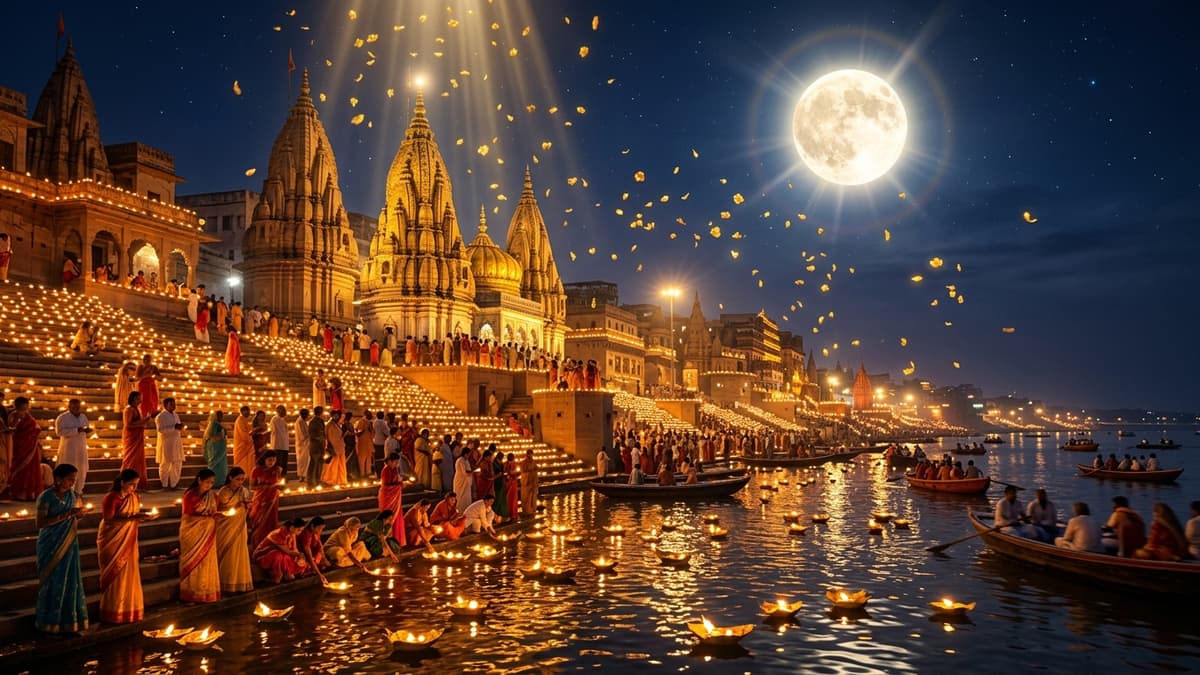
While celebrated nationwide, the cultural zenith of Dev Diwali takes place along the sacred crescent-shaped riverfront of Varanasi (Kashi). All 84 historic stone ghats—from Assi Ghat and Dashashwamedh Ghat to Panchganga and Rajghat—are illuminated with over a million glowing clay diyas.
The evening spectacle begins with the blowing of sacred conch shells, beating of kettle drums, and the grand Maha Aarti performed by hundreds of Vedic priests holding towering multi-tiered brass oil lamps. Thousands of pilgrim boats glide gently over the sacred Ganga, creating a celestial reflection of starlight on the river. Classical musical recitals, laser lighting depicting Shiva's cosmic legends, and patriotic tributes to armed forces martyrs at Dashashwamedh Ghat make Kashi Dev Deepawali one of the world's most breathtaking spiritual spectacles.
⚖️ 7. Crucial Do's and Don'ts on Dev Diwali 2026
✅ What You SHOULD Do:
- Perform Deepdan during the sacred Pradosh Kaal (05:54 PM – 08:20 PM).
- Take a holy bath early in the morning, invoking the sacred rivers.
- Light at least 11 or 21 diyas around the house, temple, and Tulsi plant.
- Perform charity of warm clothes, food, and sesame seeds to the needy.
- Conclude the month-long Kartik Snan with gratitude and prayers.
❌ What You SHOULD AVOID:
- Do not leave the home in darkness during the evening Pradosh period.
- Avoid consuming tamasic food (meat, fish, alcohol, onions, or garlic).
- Avoid cutting trees or plucking Tulsi leaves on Purnima.
- Avoid anger, quarrels, or speaking ill of anyone on this holy full moon.
- Do not commence important spiritual rituals during Rahu Kaal (03:09 PM – 04:31 PM).
Explore our complete festival directory on the Hindu Festivals & Vrats Calendar.