📖 1. The Cultural & Spiritual Essence of Divaso in Gujarat
In Gujarat and across Western India, Divaso (દિવાસો / દીવાસો) is celebrated with profound joy and domestic devotion on the final day of the Vedic month of Ashadha, known as Ashadha Vad Amavasya (અષાઢ વદ અમાસ / અષાઢી અમાસ). In Gujarati folklore and tradition, Divaso holds a unique, heartwarming place as encapsulated by the immortal saying:
("Divaso has arrived, bringing the holy month of Shravana on its wings!")
Divaso marks the sacred threshold between the intense monsoon month of Ashadha and the supremely auspicious, devotional month of Shravan. As the dark phase of Ashadha culminates on Amavasya (new moon), our ancestors established the festival of Deep Puja (દીપ પૂજા / Lamp Worship) on this very day to banish gloom, dispel negative spirits, welcome positive cosmic energy, and celebrate the light of divine knowledge before the holy fasts of Shravana commence.
Across various regions of Bharat, this very new moon is celebrated with immense fervor under different names: Hariyali Amavasya in North India (celebrating lush nature, monsoon rains, and agricultural vitality), Gatari Amavasya in Maharashtra (the eve of rigorous satvik Shravan vows), and Chokha Divaso in rural Saurashtra and South Gujarat.
📖 2. Exact Date & The Rare "Somvati Hariyali Amavasya" Yog in 2027
In 2027, Divaso falls on Monday, August 2, 2027. Because this Amavasya occurs on a Monday (Somvar), it creates the extraordinarily rare, celestial confluence known as Somvati Amavasya (સોમવતી અમાસ) combined with Hariyali Amavasya!
According to Vedic scriptures, an Amavasya falling on a Monday is ten million times more spiritually potent than a regular new moon. Monday is governed by Lord Shiva and the Moon (Chandra Dev). Observing holy river snana, performing Rudrabhisheka, circumambulating the sacred Peepal tree 108 times, and lighting ghee lamps on Somvati Divaso dissolves chronic ancestry afflictions (Pitru Dosha) and showers unfading health and prosperity upon the household.
| Panchang Element | Timing / Detail | Spiritual Significance |
|---|---|---|
| Festival Date | Monday, August 2, 2027 | Divaso / Deep Puja / Somvati Hariyali Amavasya. |
| Vedic Tithi | Ashadha Vad Amavasya (અષાઢ વદ અમાસ) | Final tithi of Ashadha month; eve of Shravan Shukla Pratipada. |
| Vedic Sunrise & Sunset | Sunrise: 06:09 AM | Sunset: 07:20 PM | Full day of auspicious solar illumination on Monday, August 2, 2027. |
| Abhijit Muhurat | 12:20 PM – 01:12 PM | Supremely auspicious midday window for Pitru Tarpan, charity, and Shiva puja. |
| Start of Holy Shravan Month | Tuesday, August 3, 2027 | First day of Shravan month begins next morning across Gujarat and Maharashtra! |
For live daytime and nighttime planetary intervals, check Today's Live Choghadiya Timings.
📖 3. Step-by-Step Deep Puja Vidhi (દીપ પૂજન વિધિ)
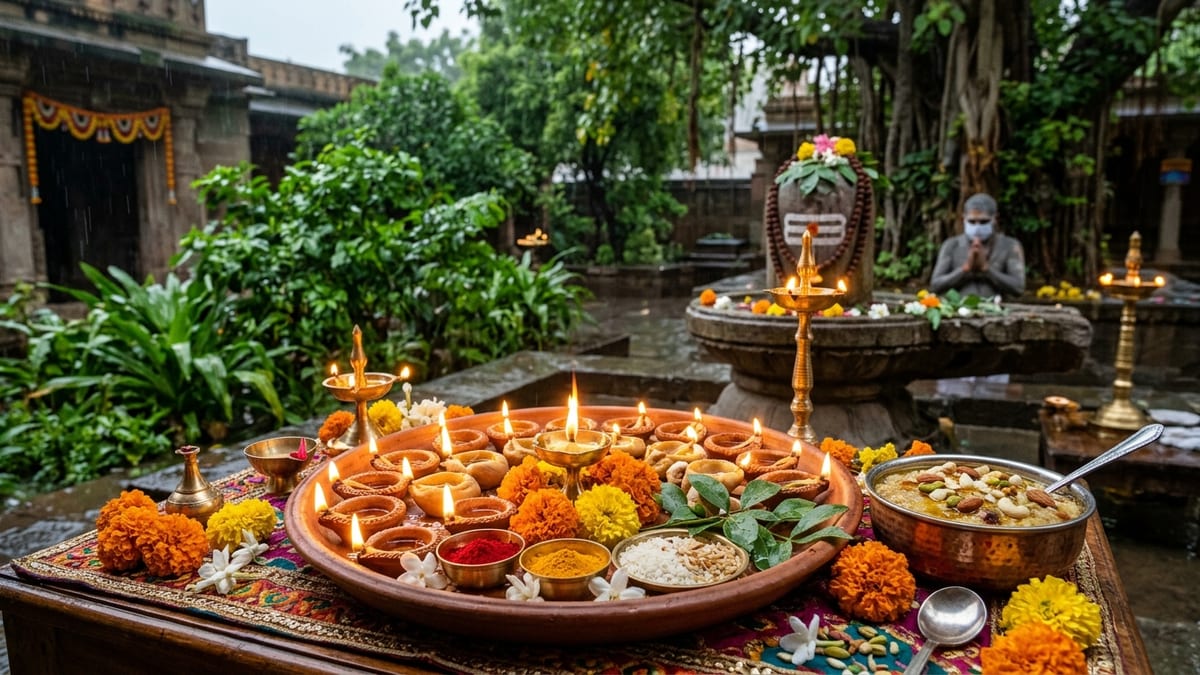
On Divaso evening, every Gujarati household transforms into a glowing sanctuary of light. Follow this traditional Deep Puja vidhi:
- Cleaning the Lamps: Gather all brass, copper, silver, and clay lamps (diyas) from your home altar. Wash and polish them thoroughly using lemon, tamarind, or pitambari so they shine brilliantly.
- Preparation of Flour Lamps (કણકના દીવા): Traditionally, women also knead wheat flour (with a pinch of turmeric and ghee) to hand-craft ornate dough lamps. Dough lamps represent the earth element (Prithvi Tattva) and attract immense domestic harmony.
- Arranging the Deepa Thali: Place a clean decorative brass or bronze thali. Draw an auspicious Swastika or Ashtadal Kamala in the center using kumkum and turmeric. Spread clean white rice grains (akshat) over it.
- Filling with Pure Ghee / Sesame Oil: Place the clean lamps on the rice bed. Fill them with pure cow's desi ghee or sesame (til) oil. Insert long handmade cotton wicks (divet).
- Lighting the Divine Flame: Light all the lamps sequentially while chanting the sacred Deepa Invocation:
"शुभं करोति कल्याणमारोग्यं धनसंपदा ।
शत्रुबुद्धिविनाशाय दीपज्योतिर्नमोऽस्तु ते ॥"
(Shubham Karoti Kalyanam Aarogyam Dhana-Sampadah; Shatru-Buddhi Vinashaya Deepa-Jyotir Namostu Te.)
"Salutations to the holy light of the lamp, which brings auspiciousness, radiant health, prosperity, and destroys negative, conflicting thoughts." - Shodashopachara Worship: Offer fragrant chandan, kumkum, abir, gulal, akshat, and yellow marigold flowers to the flame (Deepa Devata). Offer sweet Kansar or lapsi as naivedya.
- Placing Lamps Throughout the Home: Take the blessed lamps and place them respectfully at the main entrance threshold (Umbaro / Dehli), near the Tulsi plant, beside the water storage (Paniyaru), and in the courtyard.
📖 4. The Sacred Culinary Tradition of Kansar & Sweet Lapsi
No Divaso celebration in Gujarat is complete without preparing Kansar (કંસાર). Kansar is an ancient, wholesome sweet preparation made from coarsely ground whole wheat flour (faada), sweetened with unrefined jaggery (gor) or pure sugar, and generously drenched in pure cow's desi ghee.
Cultural & Spiritual Importance of Kansar:
- Symbol of Sweet Beginnings: In Gujarati ethos, sweetening the palate on the final day of Ashadha ensures that the forthcoming month of Shravana and the festive autumn season unfold with auspicious sweetness, vitality, and peace.
- Reverence to Annapurna: Kansar represents the divine gift of grain from Mother Earth and Goddess Annapurna. The first portion of hot Kansar is placed before the lit lamps and deities, and then distributed to elders for their blessings.
- Feeding Birds & Cow Seva: In Saurashtra and North Gujarat, a portion of Kansar is offered to cows (Gau Mata) and placed on rooftops for crows and birds as a gesture of universal compassion before the family partakes of the meal.
For choosing the most auspicious culinary, home, and commercial times, check out our verified Shubh Muhurat Calendar.
📖 5. Divasa Vrat for Women, Akhand Saubhagya & The Dolls Festival
Divaso is an important vrata for married women (suhagans) and unmarried maidens:
- Akhand Saubhagya Vrat: Married women observe a day-long fast on Divaso, praying to Parvati Mata and Lord Shiva for the long life, health, and career prosperity of their husbands. In the evening, after Deepa Puja and moonrise (or evening sandhya), they break their fast with Kansar.
- Prayers by Young Maidens: Young girls observe Divasa Vrat to seek an affectionate, virtuous life partner. Divaso serves as the stepping stone into the sacred monsoon fasts of Gauri Vrat, Aluna Vrat, and Kevda Trij.
- The Traditional Wooden Dolls Festival (ઢીંગલા-ઢીંગલીના લગ્ન): In rural Gujarat and coastal tribal belts (such as South Gujarat and Dangs), children and families celebrate Divaso by performing mock wedding rituals between beautifully dressed wooden or cloth dolls (Dhingla-Dhingli). This joyful folk tradition symbolizes youth, agricultural festivity, and social community bonding.
Discover inspiring mythological tales and sacred vrat stories in our curated Pavitra Vrat Kathas Archive.
📖 6. Hariyali Amavasya, Tree Worship & Pitru Tarpan
Across Northern and Central India, Ashadhi Amas is celebrated as Hariyali Amavasya (हरियाली अमावस्या). With nature carpeted in lush emerald green by peak monsoon showers, our Vedic tradition mandates the worship and planting of sacred trees:
- Ashvattha (Peepal Tree) Worship: Lord Krishna declares in the Bhagavad Gita: "Ashvatthah Sarva-Vrikshanam" (Among all trees, I am the Peepal). On Somvati Divaso, circumambulating the Peepal tree 108 times with white cotton thread while offering water, milk, and black sesame invokes the blessings of the Holy Trinity and ancestors.
- Tree Planting Drive: Planting Bilva (Bael), Neem, Banyan, Amla, and Tulsi saplings on Hariyali Amavasya is believed to yield merit equivalent to donating cattle (Godaan).
- Pitru Tarpan & Daan: Amavasya is the dedicated tithi for departed ancestors (Pitrus). Offering water with sesame seeds (Tilarghya), feeding cows, crows, and dogs, and distributing grain to the needy satisfies the souls of ancestors and removes family hardships.
Learn authentic Shiva stotras and protective mantras in our Mantras & Stotras Portal.
📖 7. Auspicious Day Choghadiya Muhurats on Monday, August 2, 2027
Plan your holy snana, Somvati Shiva worship, and evening Deep Puja during these auspicious Choghadiya windows on Monday, August 2, 2027:
- Amrit (અમૃત / સર્વોત્તમ): 06:09 AM – 07:48 AM (Supreme for early morning river snana, Shiva Jalabhisheka & Peepal Parikrama)
- Shubh (શુભ / કલ્યાણકારી): 09:27 AM – 11:06 AM (Auspicious for Pitru Tarpan, charity, and grocery shopping for Shravan)
- Abhijit Muhurat: 12:20 PM – 01:12 PM (Most powerful midday victory window for donations)
- Labh (લાભ / ઉન્નતિકારક): 04:02 PM – 05:41 PM (Auspicious for cooking Kansar and kneading dough lamps)
- Amrit (અમૃત / સર્વોત્તમ): 05:41 PM – 07:20 PM (Supreme evening twilight slot for lighting all lamps, performing Deepa Aarti, and breaking fast)
📲 Track Exact Shravan 2027 Fasting Dates & Live Choghadiya
Never miss a Shravan Somvar fast, Pradosh Vrat, or live Choghadiya timer. Download the Sanatan Hindu Calendar App for 100% offline access to Vedic panchang and festival notifications.
Download Sanatan Hindu Calendar App