📖 1. Randhan Chhath 2027 Date, Vedic Panchang & Significance
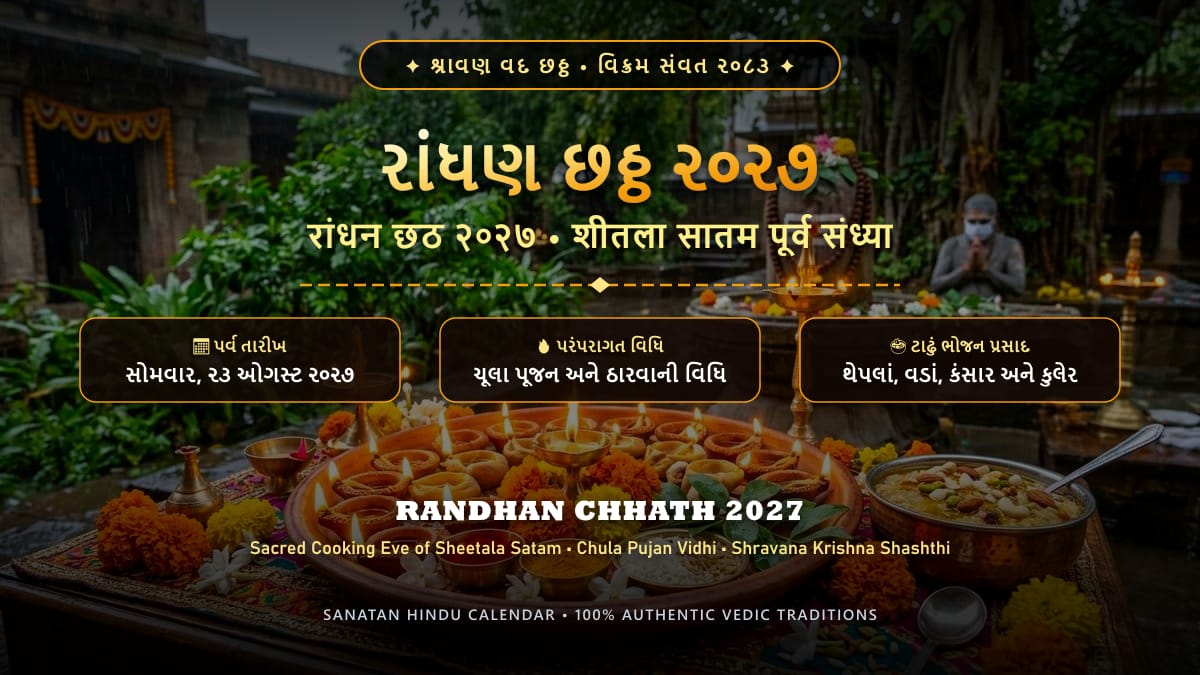
Randhan Chhath (રાંધણ છઠ્ઠ / रांधन छठ) is a deeply cherished traditional festival of Gujarat and western India, celebrated with boundless culinary passion and devotion on Monday, 23 August 2027. Falling on Shravana Krishna Shashthi (શ્રાવણ વદ છઠ્ઠ), this festival serves as the sacred culinary eve of Sheetala Satam (શીતળા સાતમ).
The word "Randhan" (રાંધણ) in Gujarati signifies cooking, while "Chhath" (છઠ્ઠ) denotes the sixth tithi of the lunar fortnight. On the following day (Sheetala Satam, Tuesday, 24 August 2027), Hindu households observe a strict vow of not igniting any fire or stove in the kitchen. Therefore, on Randhan Chhath, families prepare an elaborate assortment of delicious sweet and savory delicacies that will be consumed cold the next day as sacred "Tadhu Bhojan" (ટાઢું ભોજન / शीतला प्रसाद).
By astronomical calculations of Drik Siddhanta Vedic Ephemeris, Shravana Krishna Shashthi begins on Sunday, 22 August 2027 at 08:53 PM IST and concludes on Monday, 23 August 2027 at 09:01 PM IST. Because Udaya Tithi (sunrise at 06:18 AM IST) prevails throughout Monday, the entire daytime and evening of 23 August 2027 are celebrated as Randhan Chhath across all regions.
📖 2. The Sacred Eve of Sheetala Satam: Why Stoves are Cooled
The spiritual philosophy of Randhan Chhath is inseparable from Maa Sheetala (શીતળા માતા), the divine manifestation associated with peace, coolness, physical healing, and protection against high fevers, poxes, and seasonal epidemics:
- Resting the Hearth (ચૂલો ઠારવો): Once all cooking is completed on Monday evening or late night, the family stove (chula) is cleaned, extinguished with sacred water, and decorated. It is believed that in the quiet hours of the night, Maa Sheetala enters every home and gently rolls in the cool ashes and hearth (ચૂલામાં આળોટે છે), soothing divine heat and blessing the household with peace, health, and progeny.
- Strict Prohibition of Fire on Satam: Lighting a fire, gas burner, or microwave on Sheetala Satam is traditionally forbidden, as heat is said to cause agony to the Mother deity. Hence, families joyfully dine exclusively on the cold, wholesome fare cooked on Randhan Chhath.
- A Day of Rest for Homemakers: Historically, Randhan Chhath provided hardworking women in joint households a well-deserved complete day of rest from kitchen labor, smoke, and heat on the subsequent day of Sheetala Satam.
For live daily Choghadiya and planetary muhurats, consult our Choghadiya & Panchang Clock.
📖 3. Traditional Culinary Delicacies Prepared on Randhan Chhath
The festive kitchens of Gujarat resonate with sweet aromas of jaggery, ghee, fenugreek, and spices on Randhan Chhath. Families cook delicacies that retain superior taste, texture, and nutritional value when consumed cold:
- Bajra na Vada (બાજરીના વડાં / તલવાળા વડાં): The quintessential signature item of Randhan Chhath! Made with pearl millet (bajra) flour, ginger-chili paste, sesame seeds, jaggery, and sour curd, these savory-sweet deep-fried patties remain crispy outside and soft inside for days.
- Methi na Thepla & Masala Poori: Spiced flatbreads packed with fresh fenugreek (methi) leaves, turmeric, and ajwain, which stay tender and flavorful when eaten cold with sweet mango pickle (chhundo).
- Kuler Prasad (કુલેર): An ancient sacred cooling offering prepared by kneading roasted bajra flour with pure desi ghee and grated jaggery without using any fire. Highly nutritious and soothing for the stomach.
- Kansar & Sweet Puran Poli: Traditional broken wheat Kansar generously drizzled with cow ghee and sugar, alongside sweet lentil-stuffed puran polis.
- Khandvi, Dhokla & Handvo: Steamed and baked savory snacks made with fermented lentil-rice batters that remain moist and delicious without reheating.
- Curd, Buttermilk & Pickles: Fresh earthen pots of set curd (dahi), spiced chaas, and traditional homemade mango and lime athana.
📖 4. Step-by-Step Chula Pujan & Hearth Cooling Vidhi
Perform the sacred Chula Pujan on Monday, 23 August 2027 after all cooking is finalized:
- Complete All Cooking Before Sunset/Night: Conclude all frying, boiling, and roasting well before retiring to sleep.
- Deep Cleaning: Wash and clean the gas stove, earthen chula, and cooking countertops thoroughly with clean water mixed with a few drops of Gangajal.
- Cooling the Hearth (ચૂલો ઠારવો): Ensure every ember or flame is completely extinguished. Sprinkle fresh water, milk, or curd gently over the burners/hearth.
- Swastik & Tilak: Using wet vermilion (kumkum) and turmeric (haldi) paste, draw an auspicious Swastik (સાથિયો) on the front of the stove.
- Sacred Offerings: Offer unbroken grains of rice (Akshat), fresh yellow/orange marigold flowers, and a small wisp of clean raw cotton (રૂનું પૂમડું).
- Sheetala Mata Prarthana: Light a single pure ghee diya next to the clean stove (not on it) and recite the traditional Sheetala Mata prayer:
॥ श्री शीतला माता प्रार्थना मन्त्र ॥
वन्देहं शीतलां देवीं रासभस्थां दिगम्बराम्।
मार्जनीकलशोपेतां शूर्पालङ्कृतमस्तकाम्॥
"Vande'ham Sheetalam Devim Rasabhastham Digambaram | Marjani-Kalashopetam Shurpalan-Krita-Mastakam ||"
(I bow to Goddess Sheetala, seated upon a donkey, holding a purifying broom and sacred water kalash, who removes all burning fevers and grants radiant health.)
Find authentic Vedic stotras and aartis in our Mantras Collection.
📖 5. The Inspiring Folk Story of Sheetala Satam (દેરાણી-જેઠાણી કથા)
The sacred tradition of cooling the chula is enshrined in the timeless Gujarati folk story of two daughters-in-law (Derani and Jethani):
The arrogant elder daughter-in-law (Jethani) disregarded tradition and left burning embers in her hearth on Randhan Chhath. When Maa Sheetala arrived in the night to roll in the hearth, Her body suffered burns from the hidden embers. Aggrieved, She cursed the arrogant household. Conversely, the humble, devoted younger daughter-in-law (Derani) meticulously cleaned, cooled, and offered curd and flowers to her hearth. Maa Sheetala was overjoyed by the cool comfort, showered Her supreme divine blessings upon Derani’s child, and cured all family afflictions.
This heartwarming folk tale underscores the virtues of reverence for fire (*અગ્નિદેવ પ્રત્યે આદર*), kindness towards motherly energies, and the sacred significance of cooling both our kitchens and our minds.
Read more inspiring Puranic vrat legends at Pavitra Vrat Kathas.
📖 6. Monday, 23 August 2027 Auspicious Choghadiya & Cooking Windows
Plan your cooking and Chula Pujan on Monday, 23 August 2027 according to these classical Choghadiya slots:
- Amrit (Supreme Nectar): 06:18 AM – 07:54 AM (Ideal for morning preparations, kneading doughs, and boiling)
- Shubh (Favorable): 09:30 AM – 11:06 AM (Best daytime window for frying Theplas, Bajra Vadas, and sweets)
- Abhijit Muhurat: 12:17 PM – 01:08 PM (Midday auspicious hour for culinary excellence)
- Char & Labh (Gain & Progress): 02:17 PM – 05:29 PM (Excellent afternoon period to assemble savory snacks and sweets)
- Amrit (Evening Golden Window): 05:29 PM – 07:05 PM (Final cooking round before sunset)
- Night Labh & Shubh (Chula Pujan): 11:15 PM – 01:50 AM (Late night auspicious slot for final stove cleaning and cooling)
Explore wedding dates and sacred ceremonies on our Shubh Muhurat page.
📖 7. Ayurvedic Health Wisdom of Tadhu Bhojan & Mobile App Download
Beyond religious faith, consuming cold, unheated food during the Shravana-Bhadrapada monsoon transition holds deep Ayurvedic science:
In the classical Ayurvedic texts (Charaka Samhita and Sushruta Samhita), the humid monsoon period triggers an aggravation of Pitta Dosha (internal body heat, acidity, and bile imbalances), resulting in skin rashes, breakouts, and digestive sluggishness. Consuming cooling foods prepared with curd, jaggery, pearl millet, fenugreek, and ghee gently pacifies excess Pitta, rests the gastrointestinal tract, and builds robust immunity for the upcoming autumn season.
📲 Download Sanatan Hindu Calendar App for Real-Time Choghadiya & Tithis
Access instant Randhan Chhath & Sheetala Satam timings, Janmashtami 2027 schedules, live Shubh Choghadiya clocks, Vrat Kathas, and festival notifications 100% offline and free.
Download Sanatan Hindu Calendar App