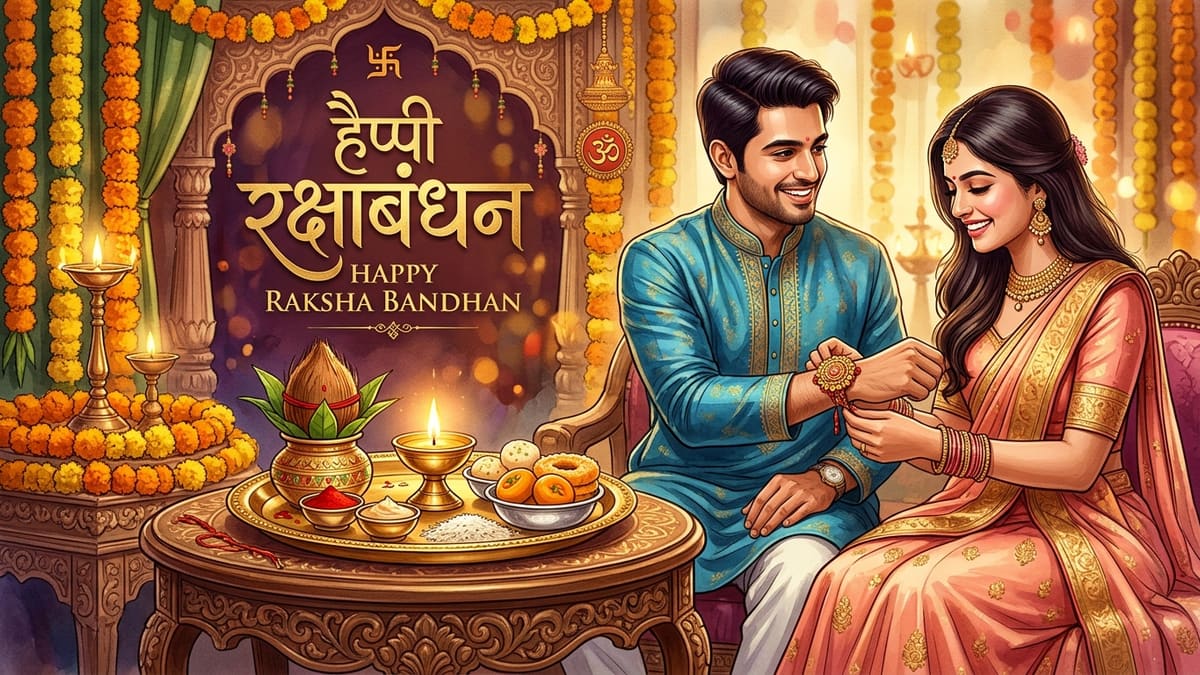
📖 1. Raksha Bandhan 2027 Date, Vedic Panchang & Bhadra Significance
Raksha Bandhan (રક્ષાબંધન / रक्षाबंधन), one of Sanatan Dharma’s most beloved and sacred festivals celebrating the unbreakable bond of mutual love, trust, and protective vows between brothers and sisters, will be grandly celebrated on Tuesday, 17 August 2027.
According to classical Vedic astrological principles (Dharmasindhu and Nirnayasindhu), Raksha Bandhan is observed on the Purnima (Full Moon) of the holy month of Shravana during the daylight hours, strictly avoiding Bhadra (the inauspicious Vishti Karan). Ancient scriptures warn: "भद्रायां द्वे न कर्तव्ये श्रावणी फाल्गुनी तथा" (Two celebrations must never be performed during Bhadra — Shravani/Raksha Bandhan and Phalguni/Holika Dahan).
Devotees across the globe will rejoice knowing that on Tuesday, 17 August 2027, the morning is completely free from Bhadra! Bhadra commences on Monday, 16 August at 10:28 AM and concludes on Monday night at 11:44 PM IST. Therefore, by sunrise on Tuesday, 17 August 2027, all shadow of Bhadra has dispersed, leaving the entire morning blessed and pristine for tying the sacred Rakhi thread.
📖 2. Exact Shravana Purnima Tithi Timings & Muhurat Windows
The exact astronomical timings for Shravana Shukla Purnima 2027 calculated via Drik Siddhanta Vedic Ephemeris are:
- Purnima Tithi Commences: Monday, 16 August 2027 at 10:28 AM IST
- Purnima Tithi Concludes: Tuesday, 17 August 2027 at 01:00 PM IST
- Bhadra Karan Duration: Monday, 16 August 2027 from 10:28 AM to 11:44 PM IST (Ends Monday Night)
- Udaya Tithi Sunrise (17 August 2027): 06:16 AM IST
- Sunset (17 August 2027): 07:10 PM IST
- Prime Rakhi Tying Muhurat (During Purnima): 06:16 AM to 01:00 PM IST (Duration: 6 hours 44 minutes)
- Aparahna (Afternoon) Muhurat: 01:54 PM to 04:30 PM IST
- Abhijit Muhurat: 12:18 PM to 01:09 PM IST
For city-wise customized local sunrise and tithi variations, check our live Choghadiya & Panchang Clock.
📖 3. Tuesday, 17 August 2027 Shubh Choghadiya Schedule
Aligning the Rakhi tying ceremony with an auspicious Choghadiya enhances peace, prosperity, and harmony for both brother and sister:
- Char (Moderate / Dynamic): 09:29 AM – 11:06 AM (Ideal for arriving at family homes and beginning preparations)
- Labh (Gain & Prosperity): 11:06 AM – 12:43 PM (Highly auspicious for tilak, aarti, and tying Rakhi)
- Amrit (Supreme Nectar): 12:43 PM – 02:20 PM (The most auspicious daytime slot for rituals, feasts, and exchanging gifts)
- Shubh (Favorable): 03:56 PM – 05:33 PM (Auspicious afternoon slot for extended family celebrations)
- Rahu Kaal (Avoid beginning new ceremonies): 03:56 PM – 05:33 PM IST (Note: Local planetary timings may vary)
Review comprehensive wedding and festival dates on our Shubh Muhurat page.
📖 4. Spiritual Dimensions: Nariyal Purnima, Balev & Shravani Upakarma
Shravana Purnima is celebrated under multifaceted sacred traditions across the Indian subcontinent:
- Nariyal Purnima (નાળિયેરી પૂનમ): Celebrated prominently along the coastal belt of Gujarat, Maharashtra, Goa, and Konkan. Fishermen and maritime communities offer golden coconuts (Shreefal) to Lord Varuna (God of Waters and Oceans) to invoke protection, calm monsoon waves, and usher in the bountiful new fishing season. Coconut dishes like Narali Bhat and coconut laddoos are prepared with devotion.
- Balev & Shravani Upakarma (બળેવ / યજ્ઞોપવીત સંસ્કાર): Commemorating Lord Vishnu’s Vamana Avatar and King Mahabali’s piety. On this day, Brahmins and Dvijas perform Hemaadri Prayashchitta, sacred ablutions in holy rivers, chant the Gayatri mantra, discard the old sacred thread (Janoi), and don the newly consecrated Yajnopavita.
- Pavitropana (પવિત્રોપણા ઉત્સવ): In Vaishnava and Pushtimarg temples, exquisitely woven multi-hued silk threads (Pavitra) are dipped in saffron, scented with sandalwood paste, and lovingly adorned upon Bhagwan Shree Krishna / Thakorji.
- Kajari Purnima: In Madhya Pradesh, Uttar Pradesh, and Bihar, women pray for agricultural prosperity and nurture freshly sprouted barley saplings.
Explore our deep library of sacred stories at Pavitra Vrat Kathas.
📖 5. Traditional Legends Behind the Sacred Raksha Thread
The antiquity of Raksha Bandhan is anchored in several inspiring Puranic episodes:
- Bhagwan Krishna and Draupadi: When Lord Krishna’s index finger was cut by the Sudarshana Chakra, Draupadi instantly tore a strip of silk from her royal sari and tied it around His bleeding hand. Deeply touched by her devotion, Krishna pledged eternal protection. When Draupadi faced humilation in the Kaurava royal assembly during the Cheer Haran, Krishna miraculously supplied an infinite stream of sari fabric, shielding her dignity.
- Maa Lakshmi and King Bali: When Lord Vishnu stayed in Sutala Loka as the gatekeeper of King Bali, Goddess Lakshmi disguised Herself as a poor maiden and tied a Rakhi on King Bali’s wrist. When the generous king offered Her any boon, She revealed Her divine identity and requested Lord Vishnu’s return to Vaikuntha. King Bali happily granted the wish.
- Indra and Maharani Sachi: In the epic war against the Asuras, Brihaspati advised Queen Sachi to tie a sacred energized thread (Raksha Sutra) around Indra’s wrist, empowering the Devas to emerge victorious.
- Yama and Yamuna: Goddess Yamuna tied a sacred thread around the wrist of Her brother, Lord Yama (God of Justice). Delighted, Yama granted Her immortality and blessed that any brother whose sister ties a Rakhi on this sacred day shall be protected from untimely calamity.
📖 6. Step-by-Step Rakhi Puja Vidhi & The Sacred Raksha Mantra
Perform the sacred Raksha Bandhan ritual with mindful devotion following these steps:
- Morning Snan: Awaken during Brahma Muhurat, take a purifying bath, and wear clean traditional ethnic attire.
- Decorate the Rakhi Thali: Arrange a glistening brass or silver plate containing: Kumkum/Roli, Akshat (unbroken rice grains), Chandan paste, a burning pure cow ghee diya, holy water in a kalash, fresh sweets (kaju katli, ghevar, or peda), a holy coconut (shreefal), and the consecrated Rakhi thread.
- First Rakhi to the Divine: Tie the first Rakhi to Lord Ganesha, Lord Krishna, or the family deity to seek divine grace and supreme protection for the entire lineage.
- Direction for Brother: The brother sits comfortably on a wooden asana facing East or North. The sister sits facing him (West or South).
- Tilak & Akshat: The sister gently applies a fragrant Kumkum/Chandan tilak on the brother's forehead and places a few grains of unbroken Akshat upon it.
- Aarti: The sister waves the lit ghee diya clockwise three or seven times around the brother's face, praying silently for his health, longevity, and success.
- Tying the Raksha Sutra: The sister ties the sacred Rakhi firmly on the brother's right wrist while chanting the ancient Vedic Raksha mantra:
॥ प्राचीन वैदिक रक्षा मन्त्र ॥
येन बद्धो बली राजा दानवेन्द्रो महाबलः।
तेन त्वामपि बध्नामि रक्षे मा चल मा चल॥
"Yena Baddho Bali Raja Danavendro Mahabalah | Tena Tvamapi Badhnami Rakshe Ma Chala Ma Chala ||"
(Just as the mighty demon king Bali was bound with the sacred thread of protection, I bind you with this very thread. O protective shield, stay firm and unwavering forever!)
Discover more sacred stotras and hymns in our Mantras Collection.
📖 7. Sweetening, Blessings, Gifts & Mobile Panchang Access
After tying the Rakhi, the sister feeds a piece of sweet to the brother, and the brother affectionately sweetens his sister's mouth. The brother touches his elder sister's feet for blessings (or blesses his younger sister), presents a thoughtful gift, and pledges unconditional love, honor, and protection throughout his life.
📲 Download Sanatan Hindu Calendar App for Real-Time Choghadiya & Tithis
Access instant Bhadra-free Rakhi timings, live Shubh Choghadiya clocks, Janmashtami 2027 schedules, Vrat Kathas, and festival notifications 100% offline and free.
Download Sanatan Hindu Calendar App