📖 1. Sheetala Satam 2027 Date, Vedic Panchang & Significance
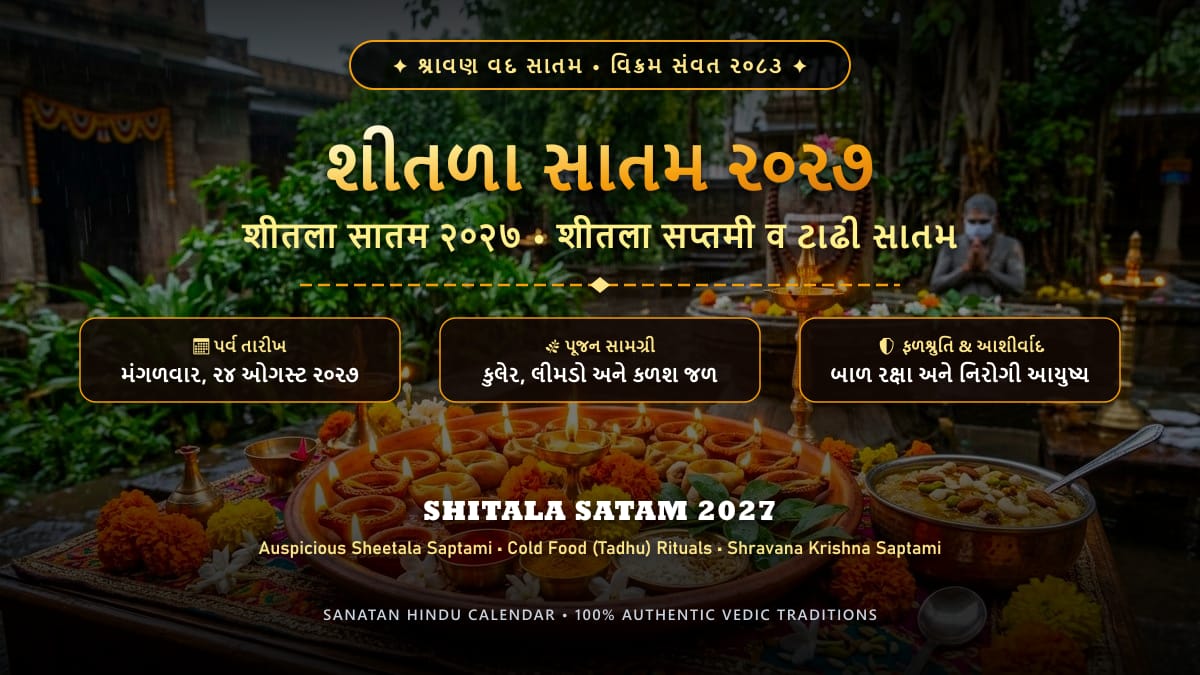
Sheetala Satam (શીતળા સાતમ / शीतला सातम / Sheetala Saptami) is one of the most sacred, culturally profound, and widely observed maternal festivals of Gujarat and Western India, dedicated to the worship of Maa Sheetala (શીતળા માતા). In the year 2027, Sheetala Satam will be reverently celebrated on Tuesday, 24 August 2027.
Observed on Shravana Krishna Saptami (શ્રાવણ વદ સાતમ), this festival immediately succeeds Randhan Chhath and precedes Krishna Janmashtami. In classical Skanda Purana traditions, Goddess Sheetala is hailed as the supreme embodiment of cooling divine grace, compassion, hygiene, and physical well-being. Mothers observe a day-long fast, perform cold water ablutions, and worship the Mother Goddess to protect their children, families, and lineage from eruptive seasonal fevers, smallpox (*શીતળા*), chickenpox (*અછબડા*), measles (*ઓરી*), and heat-induced afflictions.
According to Drik Siddhanta Vedic Ephemeris, Shravana Krishna Saptami begins on Monday, 23 August 2027 at 09:01 PM IST and concludes on Tuesday, 24 August 2027 at 08:33 PM IST. Because Udaya Tithi (sunrise at 06:19 AM IST) presides throughout Tuesday, the entire day is observed as Sheetala Satam across all regions.
📖 2. The Divine Iconography & Spiritual Symbolism of Maa Sheetala
The sacred depiction of Goddess Sheetala in Vedic dhyana stotras carries profound spiritual and public health wisdom:
- The Donkey (રાસભ / ગદર્ભ વાહન): Maa Sheetala rides a humble donkey, symbolizing steadfast humility, patience, and endurance even in the most arduous conditions.
- The Broom (માર્જની / સાવરણી): In Her hand, She holds a traditional broom, representing cleanliness, physical hygiene, sanitation, and the sweeping away of all microbial impurities and spiritual taints from the home.
- The Water Pot (કળશ / શીતળ જળ): She carries an earthen or brass pot filled with sacred cooling water, symbolizing the healing nectar of compassion that soothes high body temperatures, calms fevers, and quenches burning thirst.
- The Winnowing Basket (સૂપડું): Resting gracefully upon Her head, the winnow represents discrimination (Viveka)—the ability to separate pure, life-giving grains from chaff, disease, and toxins.
- Neem Twigs (લીમડાની ડાળખી): Neem is Mother Sheetala’s sacred plant. Rich in antiseptic and anti-viral properties, Neem leaves are used to adorn the altar and purify the household.
For live daily Choghadiya and planetary muhurats, consult our Choghadiya & Panchang Clock.
📖 3. The Sacred Rule: Complete Prohibition of Fire & Eating Cold Food
The paramount spiritual rule of Sheetala Satam is that no fire, burner, oven, stove, or microwave is lit in the home (ચૂલો ન સળગાવવો):
- Honoring the Cooled Hearth: On the previous evening of Randhan Chhath, the family hearth was cooled and decorated. Lighting fire on Sheetala Satam is strictly prohibited, as classical belief warns that fire burns the divine body of the Mother who rests in the cool hearth.
- Tadhu Bhojan (ટાઢું ભોજન / शीतला प्रसाद): All meals consumed on Tuesday, 24 August 2027 are taken completely cold, drawn from the elaborate spread lovingly cooked on Randhan Chhath—including Bajra na Vada, Methi Thepla, Kansar, and fermented snacks.
- Cold Water Bath (ટાઢા પાણીએ સ્નાન): Devotees take bath with unheated water, often infused with fresh Neem leaves, symbolizing bodily detoxification, mental composure, and surrender to cosmic cooling.
📖 4. Step-by-Step Sheetala Mata Puja Vidhi & Kuler Naivedya
Perform the sacred Sheetala Satam puja at home or at a local Sheetala Mata / sacred tree shrine following this authentic vidhi:
- Morning Snan: Awaken early in the morning and take a bath with fresh cold water. Wear clean ethnic attire (red, yellow, or pink sarees are considered auspicious).
- Prepare the Puja Thali: Arrange a brass plate with: wet Kumkum, Haldi, Chandan paste, unbroken Akshat, fresh yellow marigold flowers, fresh Neem twigs/leaves, pure raw cow milk, a small lota of clean water, and Kuler (કુલેર).
- Making Kuler (The Sacred Fireless Prasad): Knead roasted pearl millet (bajra) flour with grated organic jaggery and pure cow ghee using your hands, without using any stove or fire. Shape it into smooth mounds or balls. Place a small dot of kumkum on each.
- Offering to the Deity / Hearth: Visit a local Sheetala Mata temple, or worship at the foot of a sacred Neem / Banyan / Pipal tree, or at your cooled home kitchen stove.
- Abhisheka & Arghya: Gently offer water and raw milk, chanting the sacred names of the Goddess.
- Alankara & Naivedya: Apply kumkum and chandan tilak, place unbroken akshat and fresh neem twigs, and offer Kuler, Bajra Vada, and curd as naivedya.
- Stotra Recitation: Fold your hands and recite the timeless Sheetala Stotram from the Skanda Purana:
॥ स्कन्दपुराणोक्त श्री शीतला स्तोत्रम् ॥
शीतले त्वं जगन्माता शीतले त्वं जगत्पिता।
शीतले त्वं जगद्धात्री शीतलायै नमो नमः॥
रासभो गर्दभश्चैव खरो वैशाखनन्दनः।
शीतलावाहनश्चैव दूर्वाकण्डूयनप्रियः॥
"Sheetale Tvam Jaganmata Sheetale Tvam Jagatpita | Sheetale Tvam Jagaddhatri Sheetalayai Namo Namah ||"
(O Mother Sheetala, You are the Mother of the Universe, You are the Father and the Sustainer of creation. Salutations again and again to You, O divine embodiment of cooling peace!)
Discover complete mantras and hymns in our Mantras Collection.
📖 5. The Miraculous Derani-Jethani Vrat Katha (શીતળા સાતમ વ્રત કથા)
The heart of Sheetala Satam is the reading of the sacred Derani-Jethani Vrat Katha:
In an ancient village lived two sisters-in-law. The wealthy and arrogant Jethani neglected traditions and left glowing embers in her chula on Randhan Chhath. When Maa Sheetala entered the hearth at night, Her body was scalded by fire. In pain, the Mother cursed the household. In contrast, the pious and kind Derani meticulously cooled her stove with raw milk, decorated it with kumkum, and laid out cold prasad. Maa Sheetala rested peacefully in the cold hearth, blessed Derani with divine maternal grace, restored life and vitality to her afflicted child, and granted endless prosperity.
Read the complete, word-for-word traditional story on our dedicated Sheetala Satam Vrat Katha Page and explore our deep archive at Pavitra Vrat Kathas.
📖 6. Tuesday, 24 August 2027 Auspicious Choghadiya & Puja Muhurat
Perform your puja, temple visits, and family prayers during these favorable daytime Choghadiya windows on Tuesday, 24 August 2027:
- Brahma Muhurat (Early Snan): 04:45 AM – 05:32 AM IST
- Char (Progressive / Mobility): 09:30 AM – 11:06 AM IST (Ideal for walking to the temple and collecting neem twigs)
- Labh (Prosperity & Gain): 11:06 AM – 12:41 PM IST (Highly auspicious for performing puja, offering Kuler, and chanting stotras)
- Amrit (Supreme Nectar): 12:41 PM – 02:17 PM IST (The best daytime period for family prayers, feeding children, and reading Vrat Katha)
- Abhijit Muhurat: 12:17 PM – 01:08 PM IST (Midday victory muhurat)
- Shubh (Favorable): 03:53 PM – 05:28 PM IST (Auspicious afternoon slot for visiting family elders)
- Sunset (Saptami Conclusion): 07:04 PM IST (Ashtami / Janmashtami vigil commences at 08:33 PM)
Review comprehensive wedding and festival dates on our Shubh Muhurat page.
📖 7. Ayurvedic Science of Tadhu Bhojan & Mobile App Download
The sacred tradition of Sheetala Satam is deeply rooted in classical Ayurvedic pathology and preventive medicine:
During the late monsoon (Varsha-Sharad transition), humidity traps heat in the human body, provoking Pitta Dosha (bile, acidity, skin inflammation, and heat stroke). Consuming unheated, curd-rich, and pearl millet-based food calms internal inflammation, pacifies gastric fire, and enhances immunity against bacterial fevers. The application of Neem leaves provides potent antiseptic and antifungal protection, proving that ancient Sanatan rituals are masterclasses in preventive community health.
📲 Download Sanatan Hindu Calendar App for Real-Time Choghadiya & Tithis
Access instant Sheetala Satam muhurats, Janmashtami 2027 schedules, live Shubh Choghadiya clocks, Vrat Kathas, and festival notifications 100% offline and free.
Download Sanatan Hindu Calendar App